.png)


What Makes an Engagement Ring Durable? Understanding Ring Anatomy & Settings
When most people shop for an engagement ring, they focus on the center stone, sparkle, or overall style. But one of the biggest factors in how a ring wears over time is something many people never think about: the structure.
The anatomy of a ring affects everything from comfort to durability to how securely your center stone is protected during everyday wear.
Whether you're designing a custom ring or simply trying to understand different styles, knowing the basics can help you make a more confident decision.
The Main Parts of an Engagement Ring
Before comparing styles, it helps to understand the basic parts of a ring and what each one does.

Head
The head is the upper portion of the ring that holds and supports the center stone. The head typically includes the prongs, gallery rails, and other structural components that secure the diamond above the bridge.
Prongs
Prongs are the metal arms that extend upward around the center stone to hold it securely in place. Prongs can vary in number, shape, thickness, and placement depending on the ring design.
Gallery
The gallery refers to the side-profile area beneath and around the center stone. Depending on the design, the gallery may remain open or include gallery rails and additional structural details within the head. Gallery rails are horizontal support bars within the head that help reinforce the setting.
Shoulders
The shoulders are the upper portions of the band that transition toward the head of the ring. The shoulders may meet at the base of the head or rise higher alongside it in a cathedral design, creating an open space beneath the shoulders.
Shank
The shank is the band portion of the ring that encircles the finger and connects to the shoulders and head. The shank includes the sizing area, typically located at the bottom portion of the ring beneath the finger.
Understanding Different Prong Styles
Prongs do more than simply hold a diamond in place. The number, shape, and placement of prongs can affect how secure a stone feels, how much light enters the diamond, and even how large the center stone appears.
Some prong styles are designed to look minimal and delicate, while others offer additional protection and structure.
Four-Prong Settings
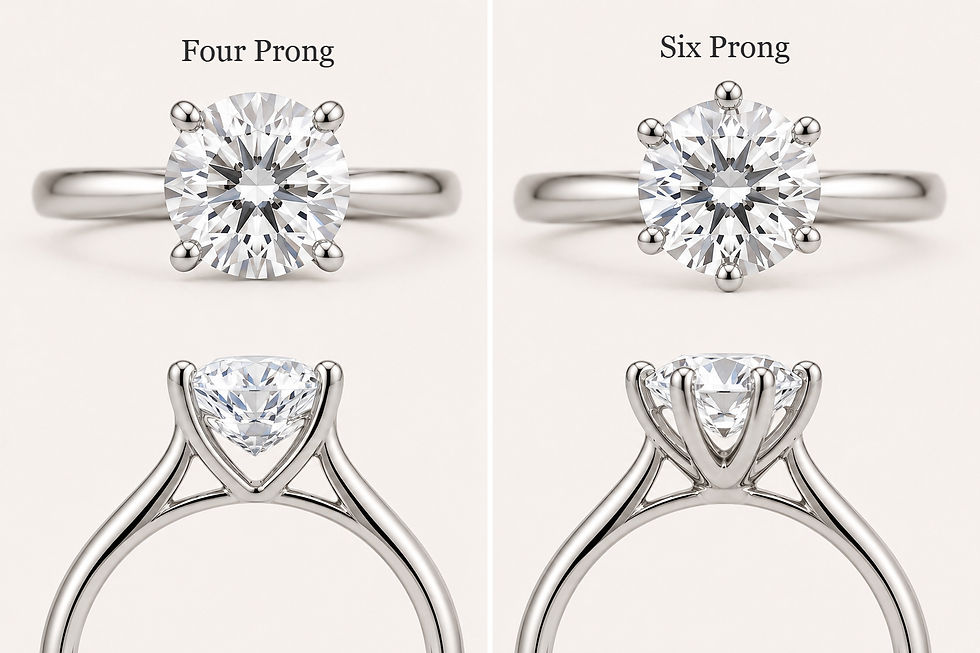
Four-prong settings allow more of the diamond to remain visible, which can create an open, airy appearance.
Because there is slightly less metal covering the stone, this style is often chosen to maximize visibility and sparkle.
Six-Prong Settings
Six-prong settings surround the center stone with additional support and security.
Many customers choose six-prong settings for extra security, especially for larger diamonds or rings intended for everyday wear.

Claw Prongs
Claw prongs taper to a finer point and are often used to create a more delicate or refined appearance.
Double Claw Prongs
Double claw prongs use two finer prongs at each corner or contact point.
This style is especially popular in vintage-inspired and fancy-shape designs because it adds detail while also helping protect vulnerable corners.

V-Prongs
V-prongs are commonly used on shapes with pointed corners, such as princess, pear, or marquise diamonds.
The metal wraps around the point of the diamond to help protect areas that may be more prone to chipping.
Bezel Settings
Unlike traditional prong settings, bezel settings surround the diamond with a rim of metal rather than using individual prongs.
Because the stone is more enclosed, bezel settings are often considered one of the more secure and protective setting styles for everyday wear.
Many customers also love bezel settings for their smooth profile and modern appearance.
What Makes a Ring More Durable?
There is no single perfect ring for everyone, but some design elements generally hold up better to daily wear.
Slightly Thicker Bands
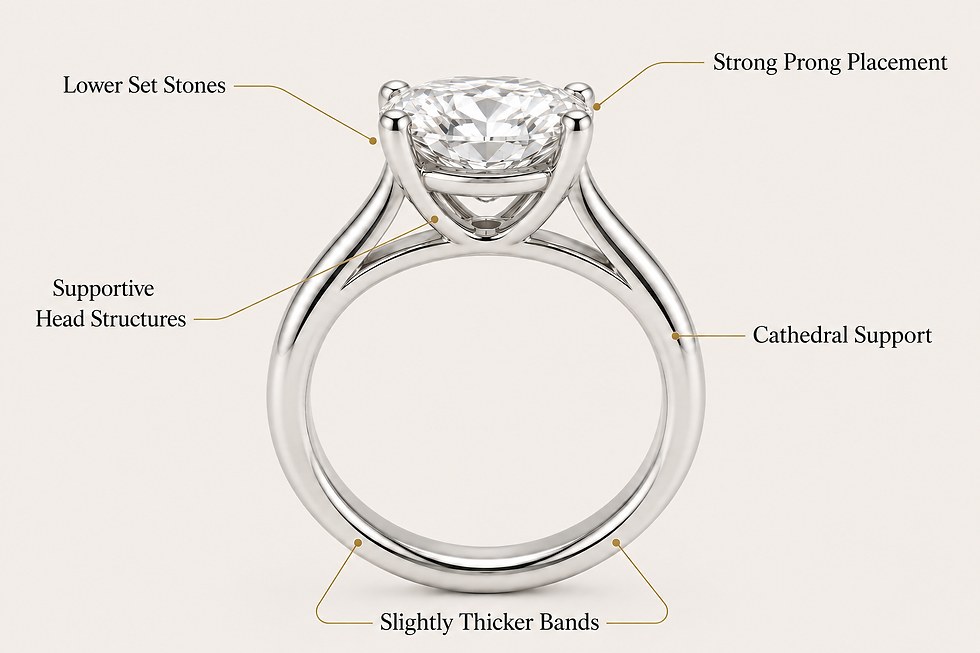
Ultra-thin bands are popular for their delicate appearance, but slightly thicker bands often provide better long-term support.
Lower Set Stones
Lower-set diamonds are often less likely to catch on clothing or experience accidental impact.
Supportive Head Structures
More supportive head structures and gallery rails can help stabilize larger center stones.
Strong Prong Placement
Well-positioned prongs help protect the corners and edges of diamonds, especially fancy shapes like marquise, pear, and princess cuts.
Cathedral Support
Additional side support can help reinforce the setting over time.
Beautiful Styles That May Require More Maintenance
Some engagement ring styles are designed to look especially delicate or intricate. While these rings can be absolutely beautiful, they may require more maintenance over time.
That does not mean they are bad choices. It simply means understanding the tradeoffs before making a decision.
Styles That May Need More Maintenance
ultra-thin bands
shared-prong diamond bands
hidden halos
large stones on delicate settings
exposed fancy shape corners
very high-set diamonds

Regular inspections and professional cleanings can help keep these styles secure and looking their best.
Finding the Right Balance Between Style & Lifestyle
The best engagement ring is not simply the trendiest or most intricate design. It's the one that fits your style, comfort level, and everyday life.
Some people prioritize delicate details and minimal metal. Others want a ring designed for maximum durability and lower maintenance.
Most customers fall somewhere in between.
At K. Hollis Jewelers, we take the time to explain how different settings are built so you can make a decision that feels right for you. Whether you love a hidden halo, vintage-inspired details, or a classic solitaire, we'll help you balance beauty, comfort, and long-term wear.
Need Help Comparing Ring Styles?
Seeing rings in person often makes these differences much easier to understand.
Visit K. Hollis Jewelers to explore different engagement ring styles, compare settings side-by-side, and talk through what design features may work best for your lifestyle.
Whether you're starting from scratch or redesigning an existing ring, we're here to help guide you through the process.


Comments